Table of contents
On a city map, the “hidden” often sits in plain sight, squeezed between an elevated rail line and a canal, or tucked behind a temple wall where tourists rarely linger, and yet these micro-neighborhoods can hold the most revealing stories. In 2026, as urban travel rebounds and walking tours, community-led maps, and hyperlocal cafés multiply, the appetite for lesser-known districts keeps rising. I kept a journal through weeks of detours, writing down not just what I saw but what the streets quietly taught, and the result was a set of encounters that felt more honest than any checklist itinerary.
Where the city stops performing
What happens when no one is selling you a story? In the city’s overlooked pockets, the choreography of “must-see” travel falls away, and you start noticing who the neighborhood is actually for. The shift can be abrupt: one block is polished, bilingual, and camera-ready, the next is a corridor of repair shops, school gates, and food stalls that serve the same handful of customers every day, with prices written in marker and conversations that don’t pause for passersby.
That’s where my notebook became less of a travel log and more of a tool for attention. I began timing my walks to the rhythms locals follow, early mornings when delivery scooters dominate the curb, late afternoons when kids pour out of classrooms and the sidewalks widen with chatter, and evenings when fluorescent light turns stainless-steel carts into tiny stages. Data helps explain why these scenes are returning to view: international tourism has largely recovered in many hubs, while remote work and flexible schedules have pushed travelers to stay longer and explore deeper; at the same time, short-form video has popularized “non-touristy” spots, turning formerly anonymous sois and side streets into destinations overnight.
Still, the most striking detail was how little these places cared about being discovered. In one lane behind a market, a seamstress measured hems while a radio murmured news; in another, an elderly man watered potted herbs outside a workshop, nodding as if to say that the street itself was the point. These moments don’t photograph well, but they read well on the page, because they show a city living rather than performing, and they challenge the idea that authenticity is something you can purchase with an entrance fee.
Small conversations, big neighborhood truths
Ask one good question, and the map changes. I learned quickly that the fastest way into a hidden neighborhood is not a shortcut but a conversation, the kind that starts with something ordinary, then opens a door you didn’t know existed. A vendor tells you which alley floods first when the rains hit; a barber points out the building that used to be a cinema; a bus conductor explains why the route bends around a particular corner, because that’s where the old community boundary ran.
Those exchanges also reveal the pressures that are reshaping many inner-city areas, and they do it with a clarity no brochure can match. Residents talk about rent rises, about landlords subdividing shophouses, about the arrival of boutique hotels that bring jobs but also noise, and about the quiet replacement of family businesses by chains that can absorb higher overheads. Urban researchers have documented these patterns for decades, yet it’s different to hear them expressed in the cadence of everyday life, as someone counts change or sweeps a threshold, and you realize that “development” is not an abstract word but a series of decisions that land on real doorsteps.
My journal entries became more structured: who I spoke to, what they said, what they avoided, what time of day it was, and what I could verify by simply walking another ten minutes. I cross-checked details in the simplest way possible, by returning at a different hour, and by asking the same question in a new spot, because the city answers differently depending on where you stand. That method kept the writing honest, and it protected me from the traveler’s temptation to romanticize hardship or turn a neighborhood into a mood board.
There was also a practical truth I couldn’t ignore: exploring lesser-known districts often means dealing with heat, long walks, unfamiliar transit links, and the occasional misstep, and when people travel for nightlife or intense social weekends, they may need straightforward health and safety planning afterward. For visitors looking for clear, locally grounded guidance, resources such as bangkokrecoveryguide.fit can help frame recovery as part of the itinerary rather than an afterthought, especially in big cities where schedules, sleep, and hydration can unravel quickly.
The hidden economy of side streets
Follow the money, and you’ll find the neighborhood’s backbone. In the districts that rarely appear in glossy guides, the economy is often a mosaic of micro-enterprises, each one tiny on its own, and yet collectively powerful: mechanics, tailors, phone repair stands, shrine vendors, delivery riders, day-care operators, and family-run eateries that function like informal community centers. The margins are thin, and the hours can be brutal, but the density of services explains why these areas stay resilient, even as trends and platforms come and go.
I started recording prices, not to bargain-hunt but to understand the local baseline. A bowl of noodles at a corner stall tells you something different than a curated “street food experience,” and a haircut priced for residents signals who a shop expects to serve. When you see repeated transactions between the same people, day after day, you understand that trust is a currency, and that convenience is not just about proximity but about relationships. Economists might describe this as a localized network effect, but on the ground it looks like a shopkeeper setting aside a preferred snack for a regular, or a vendor letting a familiar face pay later.
These side streets are also where the city’s logistics become visible. You notice the timing of garbage collection, the routes of delivery trucks, the presence of storage rooms behind metal shutters, and the way a canal or rail line shapes the flow of goods. In many cities, last-mile delivery has exploded with app-based platforms, yet the physical geography still dictates what is feasible, and you can see it in the clustering of motorbike couriers near main arteries, and in the quieter lanes where handcarts still matter.
The hidden economy has a cultural dimension, too. A neighborhood’s crafts, cuisines, and rituals are often maintained by small businesses that double as custodians of memory, and when they disappear, the city loses not just commerce but continuity. I wrote about these places with restraint, because attention can be a mixed blessing, and “discovery” sometimes arrives as rent hikes and noise complaints. The goal, I reminded myself, was to witness, to learn, and to leave lightly.
Writing it down before it vanishes
Memory edits; notebooks don’t. The more I wandered, the more I understood that hidden neighborhoods aren’t only hidden because tourists miss them, they’re hidden because cities change fast, and what feels permanent can be gone within a season. A family restaurant closes when the lease ends; a courtyard gets redeveloped; a shortcut becomes a fenced-off construction site. If you want to capture a place honestly, you have to do it while it’s still itself.
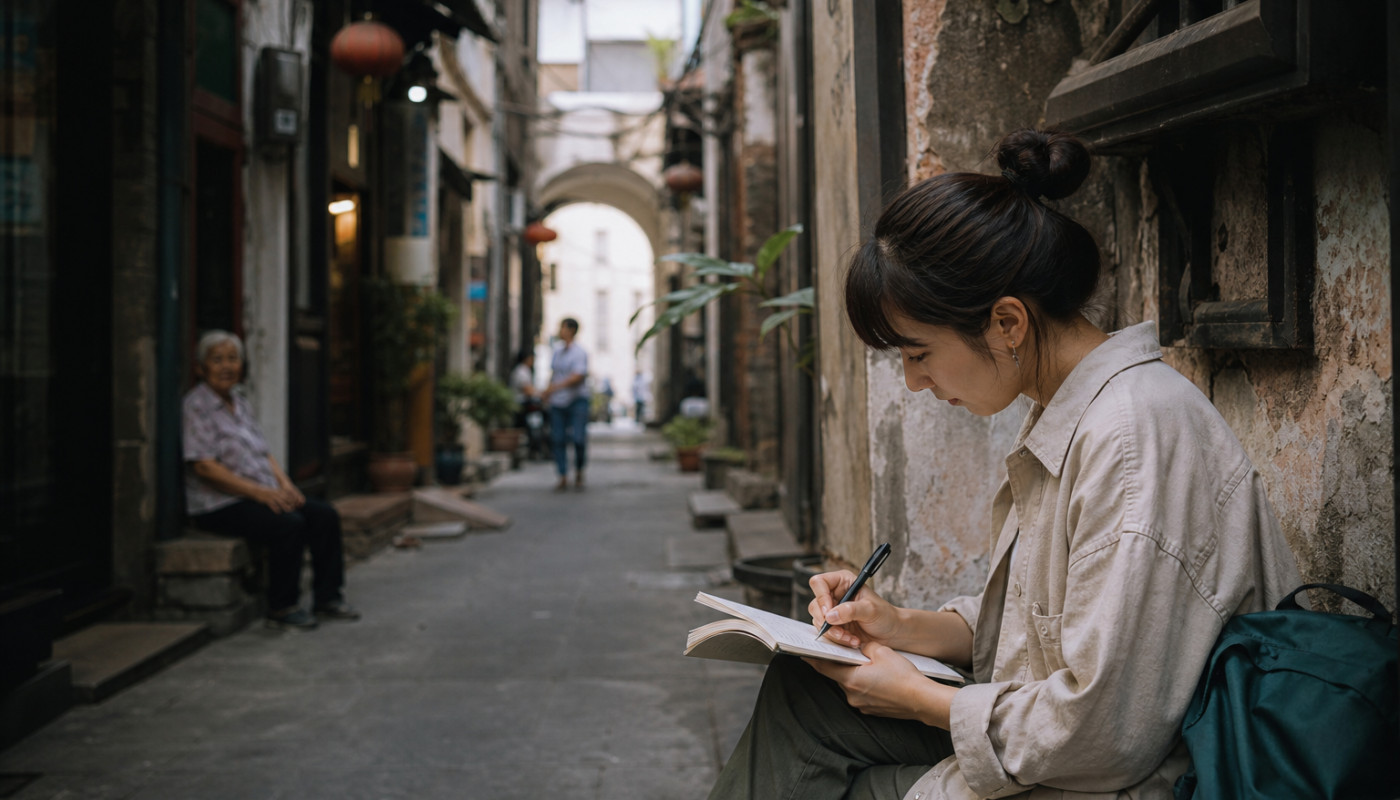
My journaling shifted from description to documentation. I noted the sounds, the smells, the texture of a wall where posters had been layered for years, and the way morning light hit a row of shutters. Then I added context: which public works were underway, what new signage suggested about incoming businesses, and how foot traffic differed on weekdays versus weekends. This is where the journalist’s discipline helps, even in personal travel writing, because it forces you to separate what you feel from what you can observe, and it pushes you to ask what the scene means beyond your own presence in it.
There is also an ethical edge to documenting “hidden” places. Publishing too much detail can turn a refuge into a commodity, so I avoided giving step-by-step directions to fragile spots, and I focused instead on patterns a reader can use responsibly: take public transit when possible, spend money locally, ask before photographing people, and leave room for daily life to continue unbothered. A city’s lesser-known districts are not a backdrop; they’re home.
In the end, the journal became a bridge between curiosity and care. It reminded me that the most surprising stories rarely announce themselves, and that they usually begin when you slow down, look up, and accept that you might not be the intended audience for what you’re seeing, and that’s precisely why it matters.
Planning the detour, and the recovery
Build your route around daylight, transit access, and time buffers; book accommodation with flexible check-in, and set a realistic daily budget for food, rides, and small purchases that support local shops. If you’re mixing late nights with long walks, plan rest, hydration, and sleep like essentials, and check what services exist nearby before you need them.
Similar